P2P liquidity platform · DeFi
Lendbit
A peer-to-peer lending and borrowing platform: lend, or borrow against crypto collateral, with no intermediary. I led the build and wrote both the smart contracts and the UI. It won the QuickNode Build On hackathon and Base Around The World, and Base spotlighted it.
- role
- Led the build; wrote the smart contracts and the UI
- organisation
- Lendbit Finance (HODL Technologies)
- period
- Jul 2024 – Jun 2025
- 1st
place at QuickNode's Build On hackathon, with Odos and CoinPaprika sponsor prizes
source: Devfolio project page
- Winner
Base Around The World (Based Africa)
source: Devfolio project page
- Base
spotlighted Lendbit's cross-chain lending on its official account (June 2025)
source: Base on X
The problem
On-chain lending asks people to read collateral ratios, loan positions and protocol health across chains, and to trust contracts they cannot read. The product had to make risk legible (what you can borrow, what is at stake, when a position is in danger) while keeping the matching peer-to-peer and permissionless.
What I built
I led the build of Lendbit as a cross-chain, peer-to-peer lending protocol: lenders and borrowers meet through orders, and borrowing is backed by collateral.
I wrote the smart contracts (Solidity, the EIP-2535 diamond pattern for upgradeability, built and tested with Foundry) and integrated them in a Next.js and ethers.js interface, with real-time pricing and swaps through the Odos API and market data from CoinPaprika.
I built real-time dashboards for collateralization, loan positions, borrow power and protocol health, plus gasless smart-account onboarding, and prototyped AI borrower–lender matching.
Screens
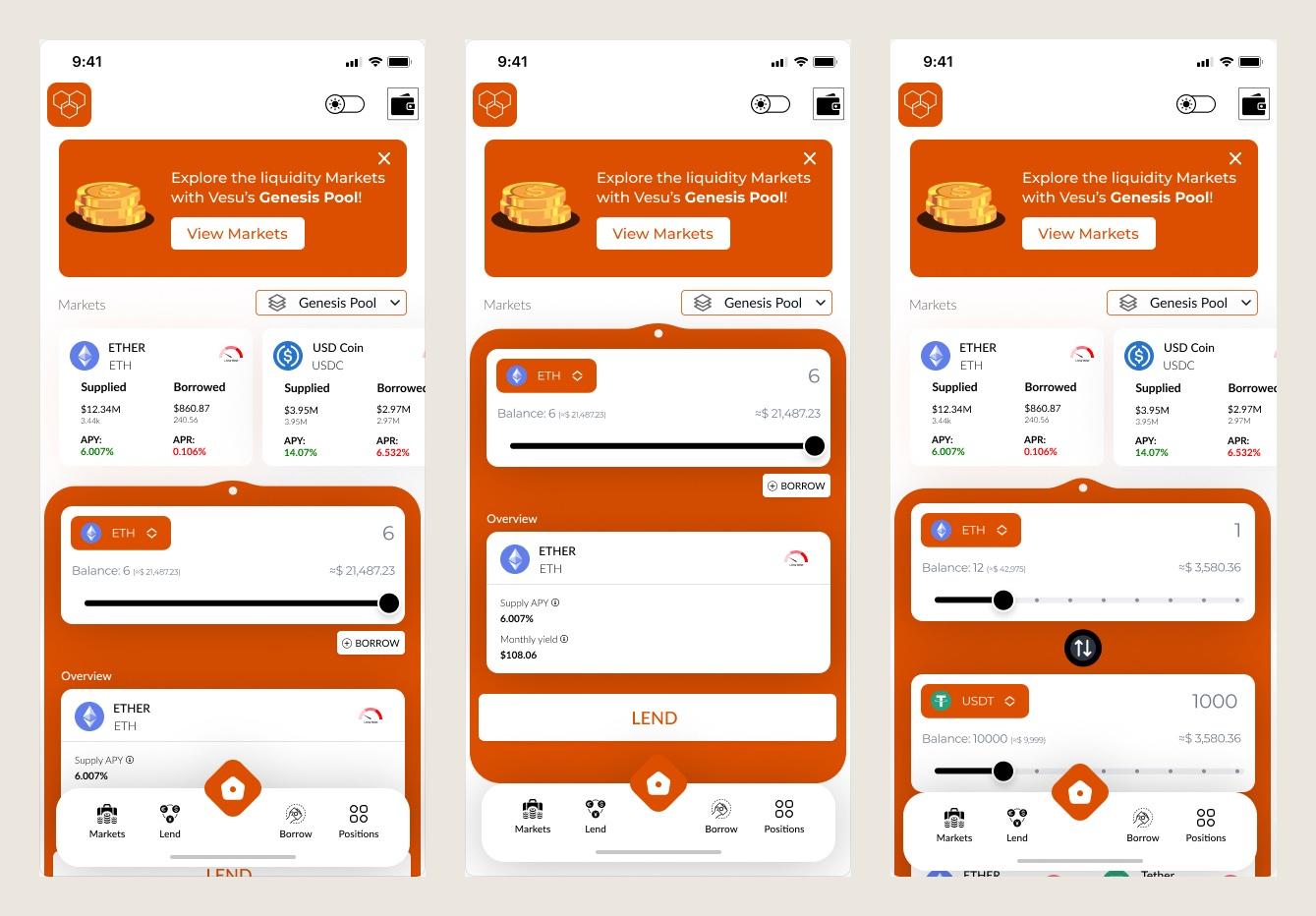
Lendbit mini-app (design)The mini-app design: a banner and markets carousel, a lend and borrow 'playground' with an amount slider, live supply APY and monthly yield, and a swap-style view for choosing assets. 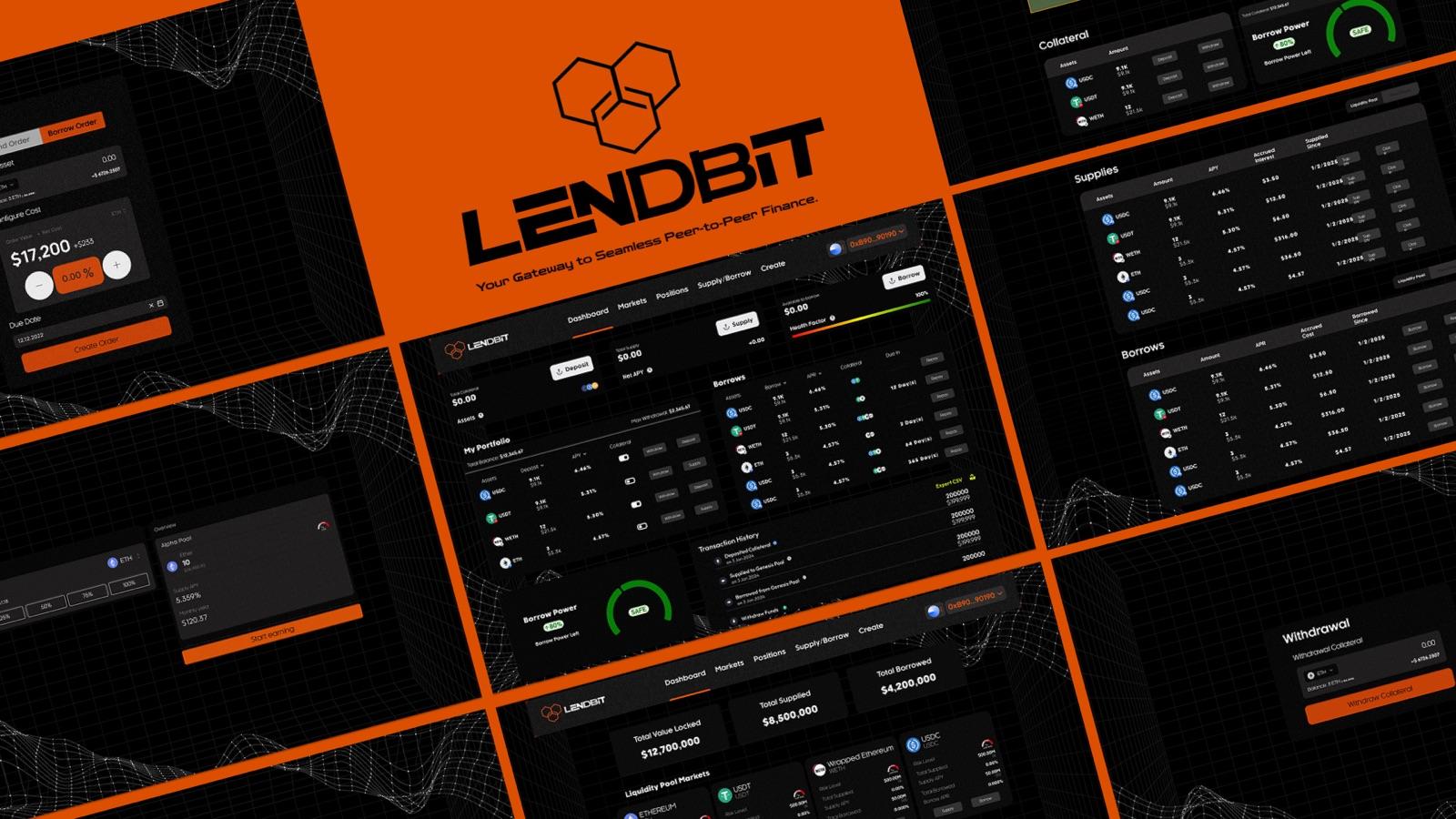
Lendbit interfaceThe Lendbit interface: dashboard, supply and borrow tables, borrow-power gauge, order creation and withdrawal flows.
Engineering decisions
- 01
Diamonds for upgradeability
The diamond pattern lets the protocol add or change facets without redeploying a monolith.
- 02
Show borrow power, not just balances
The interface leads with health factor and borrow power, so users see how close a position is to danger before they act.
- 03
Price from live sources
Swaps and prices come from live aggregators and market-data APIs rather than hard-coded values.
Stack
- Contracts
- Solidity
- EIP-2535 diamond
- Foundry
- Chainlink
- Frontend
- Next.js
- ethers.js
- Tailwind CSS
- Integrations
- Odos API
- CoinPaprika API
- QuickNode
next case study
vProtocol